Chapter 4B: Dallas ISD — TIA and the Education Privatization Pipeline
Chapter 4B: Dallas ISD — TIA and the Education Privatization Pipeline
Traces the policy pipeline from Dallas ISD's PAC-funded governance capture through TEI creation, the TEI-to-TIA state scaling without equity corrections, the state takeover mechanism (HISD, Fort Worth), and the legislative failure to establish charter oversight. Introduces Sub-Question 4: Does TIA incentive funding follow student need or concentrate in already-advantaged campuses?
The Teacher Incentive Allotment (TIA, TEC §48.112) can be traced to specific actors in Dallas ISD between 2011 and 2016. Mike Morath served as Dallas ISD trustee from May 2011 to January 2016. Mike Miles served as superintendent from July 2012 to June 2015. Todd Williams, a retired Goldman Sachs partner who had co-managed a $60 billion international real estate portfolio, founded the Commit Partnership (EIN 80-0790222) in September 2011 and served as unpaid CEO. While Miles and Morath held formal positions in the Dallas ISD governance structure from 2012 to 2015, Williams operated adjacent to Dallas ISD governance through Commit Partnership, where he influenced policy through the School Finance Commission, political action committee (PAC) funding, and TIA implementation contracts.
Dallas Kids First (TEC ID 67707), which is closely tied to Todd Williams's Commit Partnership, was co-founded by Ken Barth. Donors included Harlan Crow, Daniel Muzquiz, Garrett Boone, and Ross Perot (Dallas Observer, 2013). 91% of the contributions to this PAC originated from the Highland Park and Preston Hollow zip codes, the former being outside of Dallas ISD boundaries entirely. EducateDallas, a similarly aligned PAC created by the Dallas Chamber of Commerce, listed "new teacher evaluation system tied to student performance" as its top policy priority in 2012 (KERA News, May 4, 2012). Dallas ISD holds its board elections in May, when turnout averages below 10%. Before the school privatization era, board races attracted minimal outside spending. Bernadette Nutall won with only $2,718 raised for her 2009 campaign, and in 2011, the district canceled scheduled elections when no candidates filed. Then, PAC-funded candidates swept three board races in 2012. Dan Micciche (District 3) raised approximately $90,000; his opponent raised $950 (KERA News, May 3, 2013). The two PACs contributed 64% of Micciche's funds.
Texas Ethics Commission records show several "Kids First" PACs operating simultaneously by July 2015. Dallas Kids First (TEC 67707, $1.6M+), Austin Kids First (TEC 68575), San Antonio Kids First (TEC 68719), Kids First of El Paso (TEC 70366), and Katy Kids First (TEC 69530) are a sample of the pro-privatization "Kids First" PACs that emerged across the state during this time. Overlapping donor networks, identical naming conventions, and simultaneous activation suggest coordination. While most of these PACs have since dissolved, Dallas Kids First continues through 2026 with a subsidiary, Dallas Votes 4 Kids, raising $572,000 for a 2018 bond and $395,000 for a 2020 bond.
On August 23, 2012, with Morath as a sitting trustee, the Dallas ISD board approved the Teacher Excellence Initiative (TEI) under Miles's "Destination 2020" plan (Dallas ISD Hub, September 10, 2015). With this, TEI replaced seniority-based pay with a performance-based compensation system with salaries determined through a combination of STAAR scores, classroom observations, and student surveys. Though starting salaries rose from $47,382 to $50,000, and the district advertised the highest rated teachers could earn $90,000 or more, teacher turnover jumped from 12% to 22% during Miles's tenure (2012-2015), the highest on record for the district (WFAA; Texas Tribune, 2023).
It is important to note that TEI is distinct from the Accelerating Campus Excellence (ACE) program, as the programs two have been conflated. TEI was a permanent performance-sorting system that became TIA. ACE was a temporary turnaround stipend. The National Bureau of Economic Research (NBER) documented ACE's impermanence: "when ACE stipends were substantially reduced... test scores fall" (Morgan et al., 2023, WP 31051). Billy Earl Dade Middle School, the TEI showcase campus, cycled through three principals in two years. ACE teachers departed at rates exceeding 40% after stipend reductions.
Governor Abbott appointed Morath as TEA Commissioner on December 14, 2015, citing his performance-based pay work at Dallas ISD (Governor's Press Release, December 14, 2015). Williams served on the Texas Commission on Public School Finance (2017-18), chairing the Outcomes Committee. His committee recommended $100 million to $1 billion per year for districts developing teacher evaluation metrics tied to performance pay, "explicitly modeled on Dallas ISD's TEI/ACE approach" (Commit Partnership, Todd Williams Letter, 2018). On June 11, 2019, Governor Abbott signed HB 3. The $11.6 billion bill created TIA under TEC §48.112. Dallas ISD's TEI qualified for TIA Cohort A with zero modifications and received $28 million in first-year TIA funding (Dallas ISD Hub, August 26, 2020). HB 3 was signed in June 2019. DeRocha filed the PIR in March 2019. Dallas ISD did not announce the equity fix until February 2020. TIA was already law before the originating district acknowledged the design flaw.
TIA adjusts funding by campus socioeconomic tier (1.0x to 2.5x multiplier) and rural status. TIA does not adjust for campus type: choice, magnet, and selective-enrollment campuses versus comprehensive neighborhood schools. The gap DeRocha (2019) documented persists at the state level. Commit Partnership's revenue grew from $3.6 million in 2017 to $34 million in 2024 (ProPublica, Nonprofit Explorer, EIN 80-0790222). Miguel Solis, former Dallas ISD trustee (District 8) and former chief of staff to Miles, became Commit President at $218,000 annual salary. The Texas Impact Network (Commit and Educate Texas) provides TIA implementation support across 16 of 20 ESC regions. The individuals who designed TEI now manage its statewide implementation under a different name.
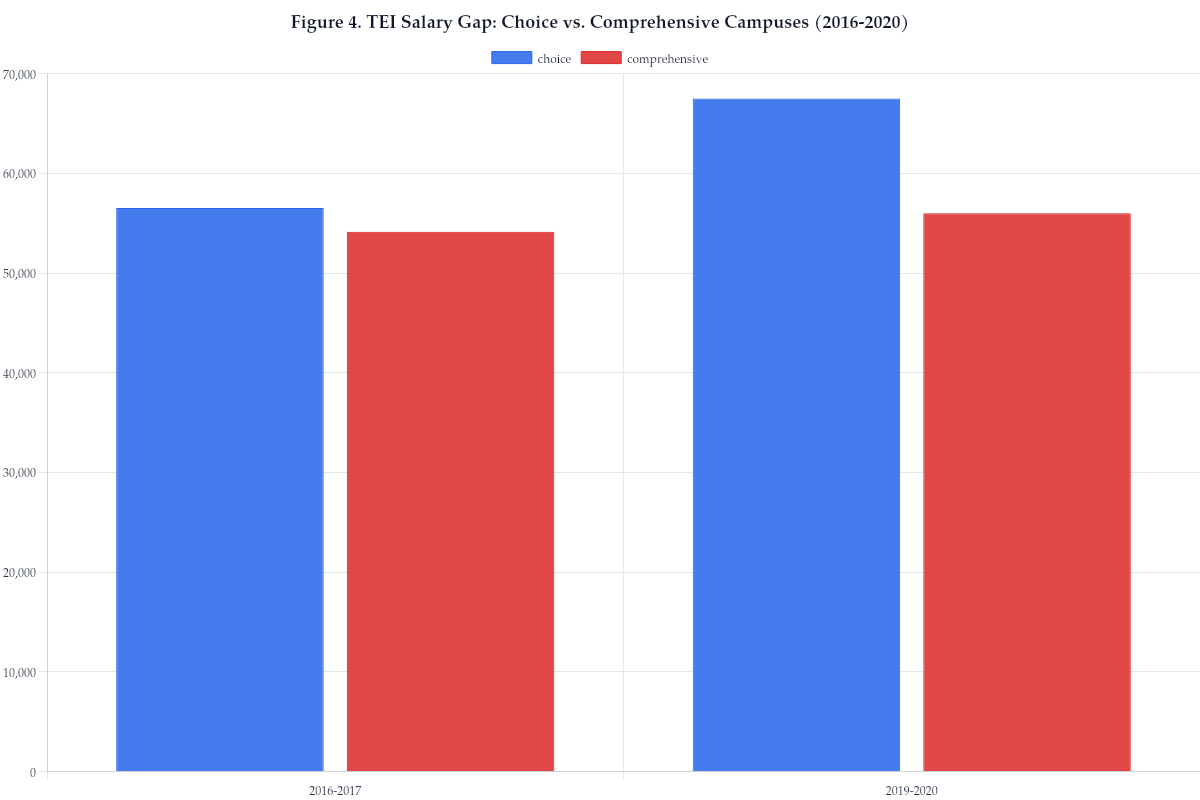
In March 2019, Dallas ISD teacher and Alliance-AFT Executive Board member Kristen DeRocha filed a Public Information Request. Her PIR data quantified the salary gap between choice and comprehensive campuses that the uniform bell-curve evaluation produced. Teachers at choice and magnet campuses, where students arrived with higher prior achievement, systematically received higher ratings and higher pay than teachers at comprehensive (neighborhood) campuses. The salary gap grew from $2,394 in 2016-17 to $11,500 in 2019-20 (DeRocha, 2019). Choice campuses averaged 55.3% economically disadvantaged students; comprehensive campuses averaged 82.1%. The ratio of "Distinguished" ratings was 31:1 at choice campuses versus 71:1 at comprehensive campuses by 2018-19. In February 2020, Dallas ISD announced "separate targeted distributions for Choice and Comprehensive campuses" beginning in 2020-21 (Dallas ISD Hub, August 26, 2020). The structural fix separated the bell curve into campus-type pools so that comprehensive teachers competed against other comprehensive teachers, not against teachers at schools with pre-selected student populations. The same correction was never made at the state level.
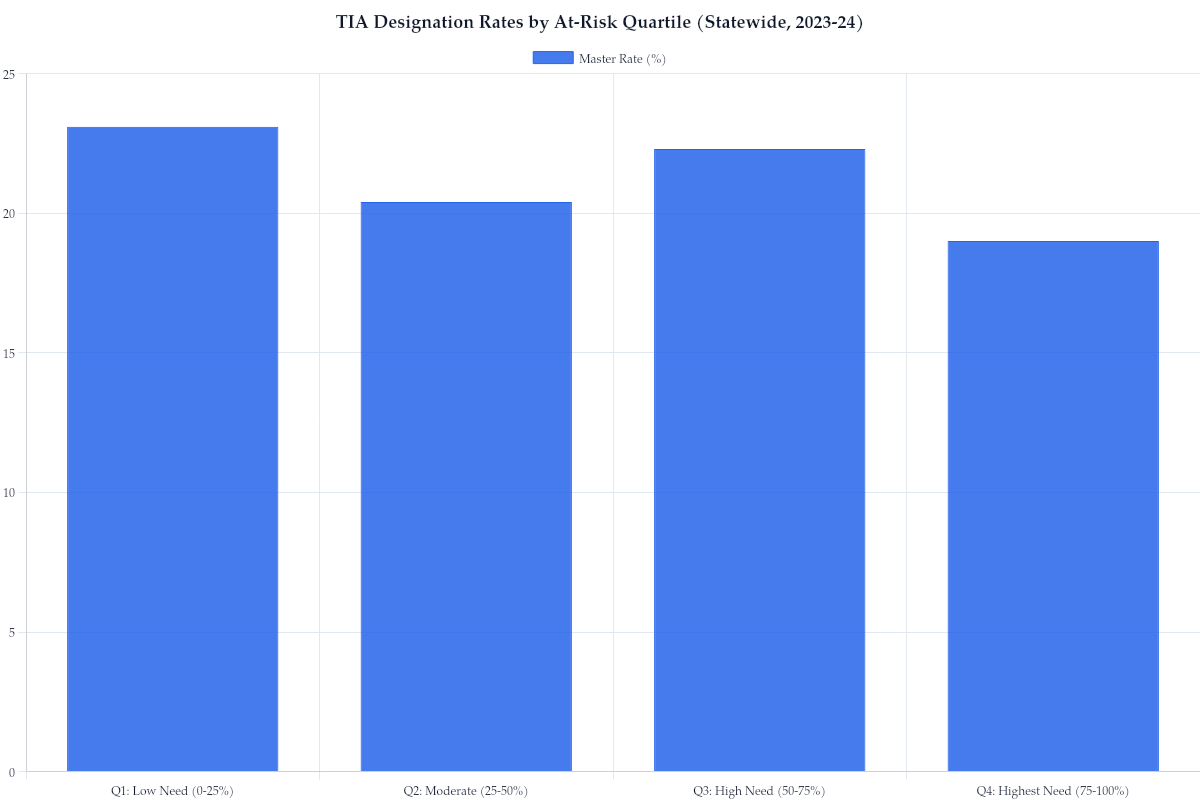
As of 2024-25, 4,803 campuses in Texas are in districts with approved Local Designation Systems, and an additional 2,550 campuses have accepted applications. Of 2,168 campuses in the highest economic-disadvantage quartile (Q4), 46.1% have zero TIA-designated teachers (Texas Education Agency, 2024). The lowest-need quartile (Q1) has 62.2% non-participating, but Q1 campuses serve students less affected by the absence of incentive funding. TIA designation amounts range from $3,000 to $9,000 for Recognized teachers, $6,000 to $18,000 for Exemplary, and $12,000 to $32,000 for Master, with the range determined by campus socioeconomic tier.
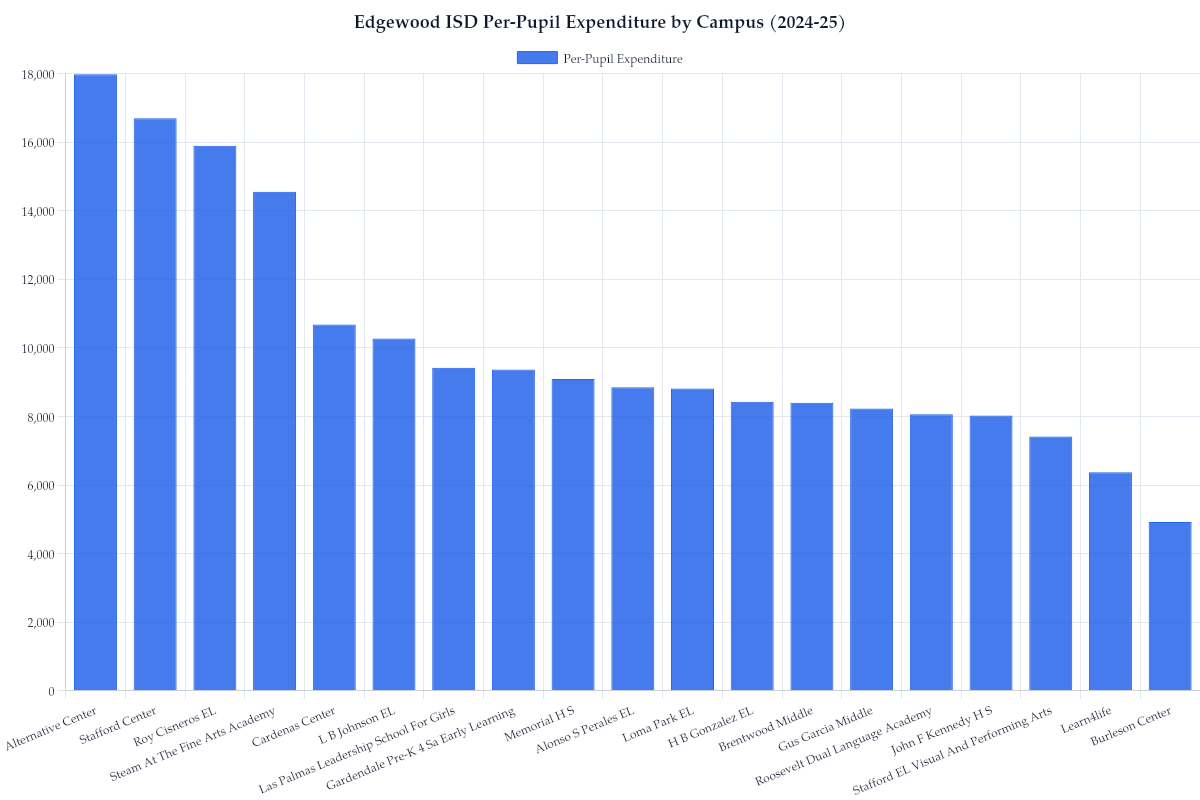
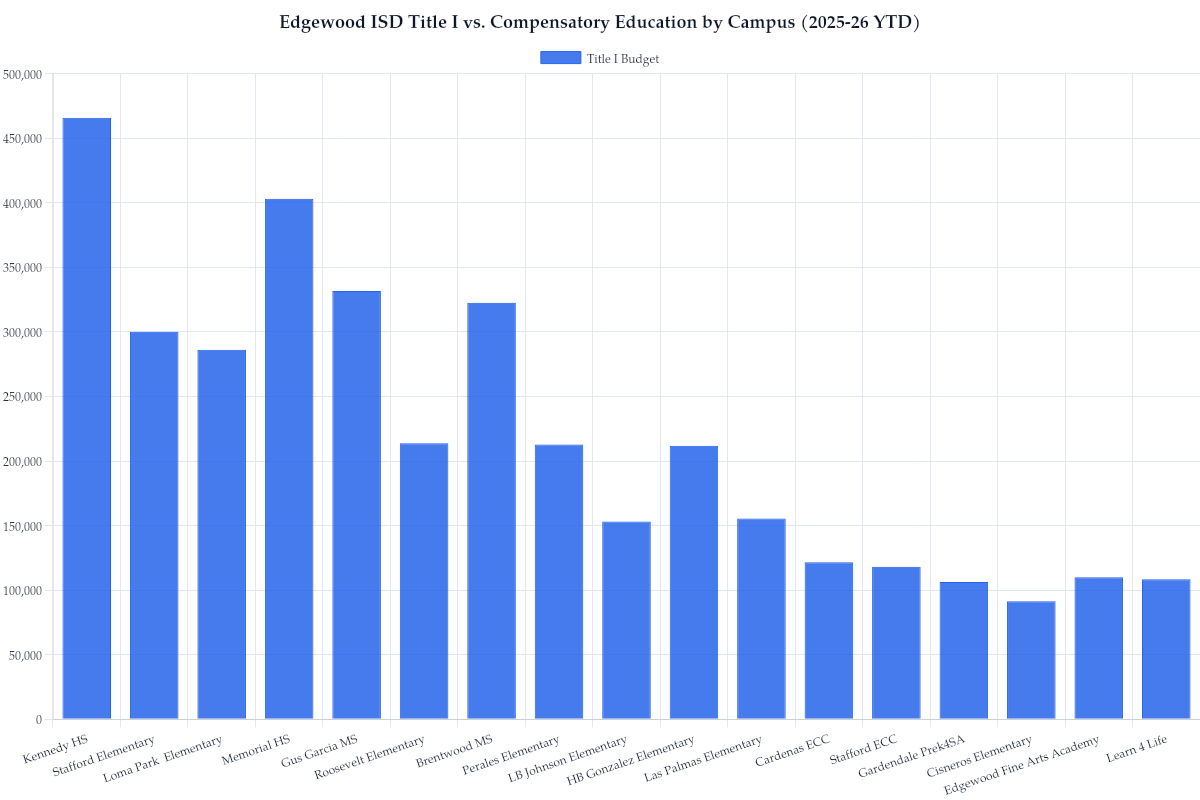
Edgewood ISD, the plaintiff district in the 1989 constitutional challenge (Edgewood v. Kirby, 777 S.W.2d 391), illustrates this gap. Edgewood serves approximately 9,000 students on the West Side of San Antonio. Of these, 97.2% are economically disadvantaged and 79.3% are considered at-risk under TEC §29.081 (Texas Education Agency, 2024). The district submitted its first TIA cohort in 2021-22. The entire cohort failed, yielding zero designated teachers and no TIA revenue (Edgewood ISD, 2024). The 2022-23 cohort reversed the outcome, surpassing the highest correlation standard. In addition to the cost of failed implementation and the administrative burden demonstrated by over 50 emails between Edgewood's TIA coordinator and the TEA, the annual renewal fee is $10,000, reimbursed five months later through the FSP Settle Up process. Templeton, Selsberg, Abdelmalak, and Abdelhamid (2023) warned that TIA's "rigorous application processes" could create barriers for "exactly the districts TIA was designed to help" (p. 292).
The pipeline extended beyond compensation policy. Morath's TEA opened a Special Accreditation Investigation into Houston ISD in January 2019. After the Texas Supreme Court sided with TEA in January 2023, Morath appointed Miles as HISD superintendent on June 1, 2023. Within one year, 4,700 of 11,000 HISD teachers (approximately 43%) left the district (ABC13; Click2Houston, 2024). Two-thirds of mid-year departures came from New Education System (NES) turnaround campuses (Houston Public Media, 2023). Miles founded Third Future Schools (TFS) in 2016 in Colorado. TFS-Texas incorporated in 2020. While serving as HISD superintendent, Miles brokered a $950,000 contract between ILTexas and Education Partners, led by Dwight Jones, the TFS board president. HISD provided NES curriculum to ILTexas at no cost (Houston Chronicle, January 2026). ILTexas operates campuses within HISD boundaries, enrolling students whose per-pupil state funding follows them from the ISD to the charter network.
In October 2025, Morath ordered a state takeover of Fort Worth ISD under TEC Chapter 39A and deployed ACE at six schools with $100,000 teacher salaries (Fort Worth Report, 2026). Three of the five largest Texas districts now share the same intervention playbook deployed by the same network of individuals. Edwin Flores served as Dallas ISD trustee (2005-2012), received $10,000 from EducateDallas, and in 2013 joined the boards of both ILTexas and KIPP-Dallas-Fort Worth simultaneously. Flores also sat on the Teach For America DFW board and the George W. Bush Institute education advisory board. In November 2024, the TIA Texas website published a 12-page case study promoting Dallas ISD as a TIA success story. The case study credited TEI to Miles, did not mention DeRocha's (2019) equity analysis, did not mention the salary gap, and did not mention the 2020-21 equity fix (TIA Texas, 2024).
TIA's socioeconomic tier multiplier directs more per-teacher funding to high-poverty campuses. Funding per teacher only matters if high-need campuses produce comparable numbers of designated teachers. The 46.1% zero-designation rate at Q4 campuses means the students in the highest-need quartile are least likely to have a TIA-designated teacher. The participation gap between selective and high-need campuses is 13.1 percentage points. The traceable pipeline from the Dallas ISD boardroom (2012), state law (2019), and implementation management (2024) connects the local governance capture in Dallas to statewide resource capture through the same actors. Under the Morath suitability standard, a program that systematically advantages already-advantaged campuses raises structural soundness concerns about the state's school finance system.
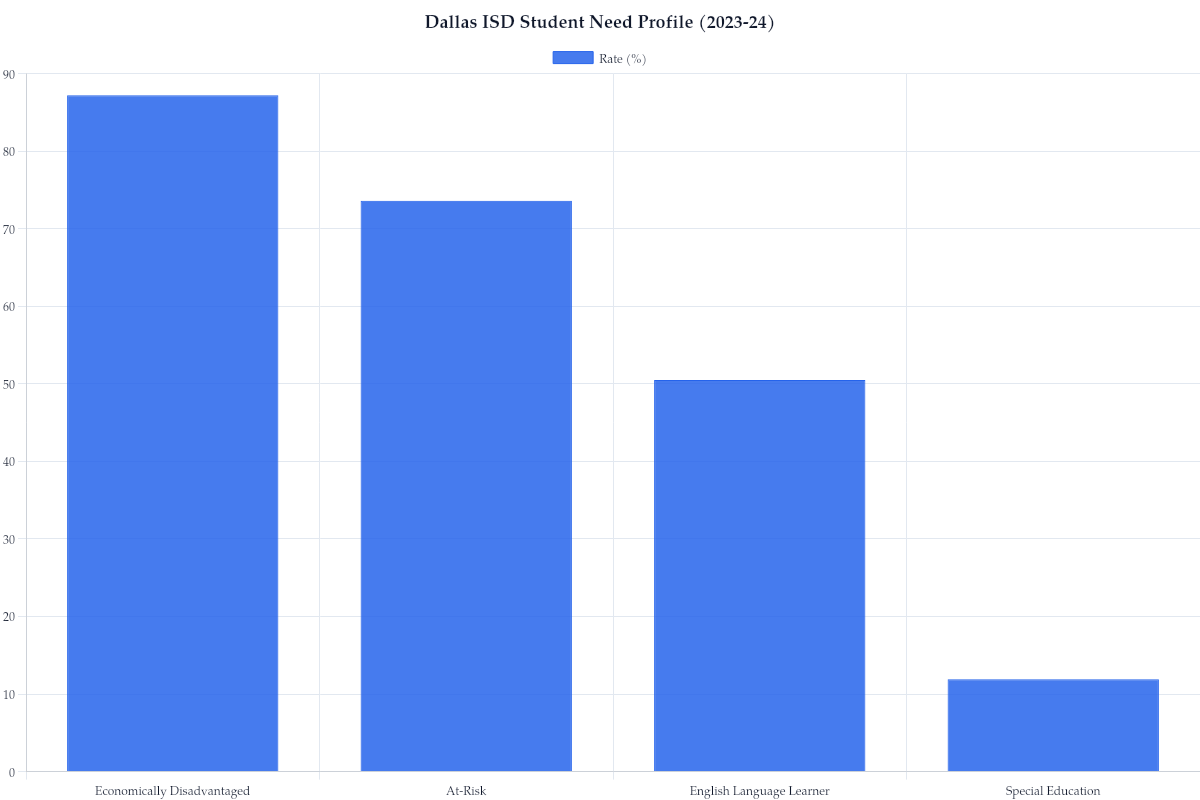
Dallas ISD Student Need Profile (2023-24)
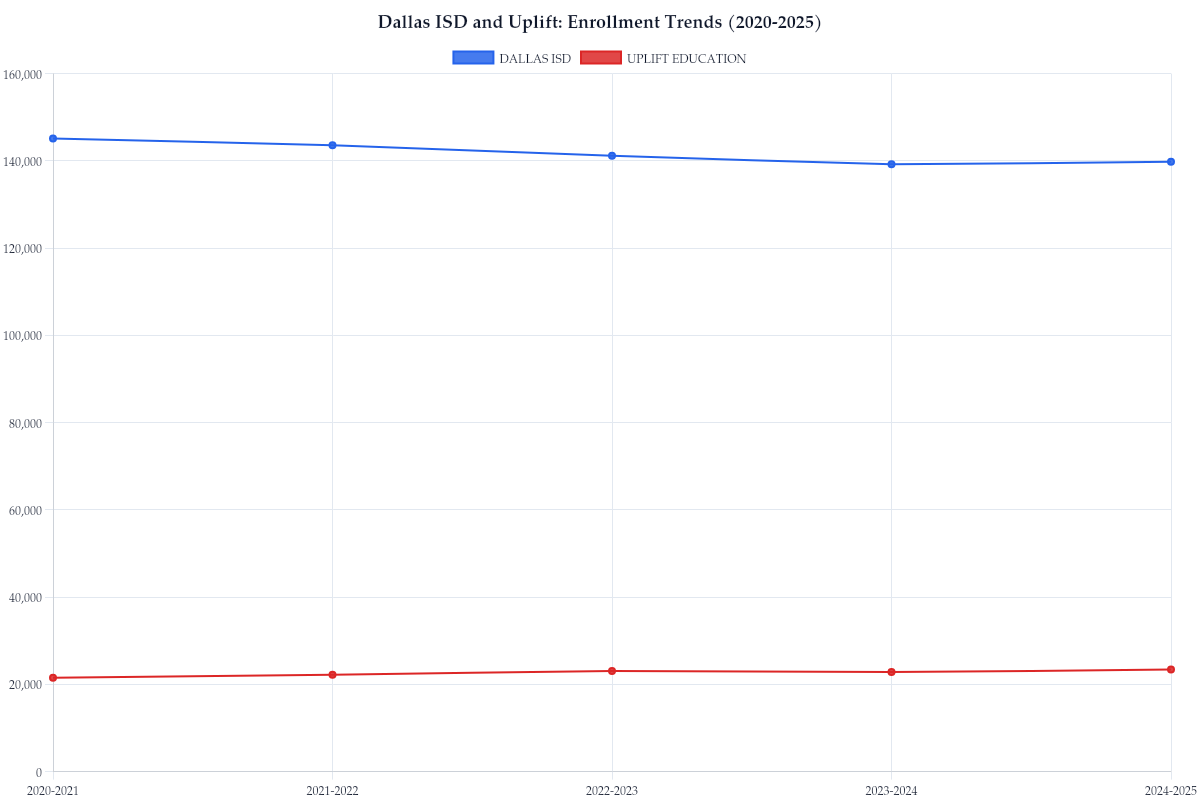
Dallas ISD and Uplift: Enrollment Trends (2020-2025)
Region 10 At-Risk Rates (2023-24)
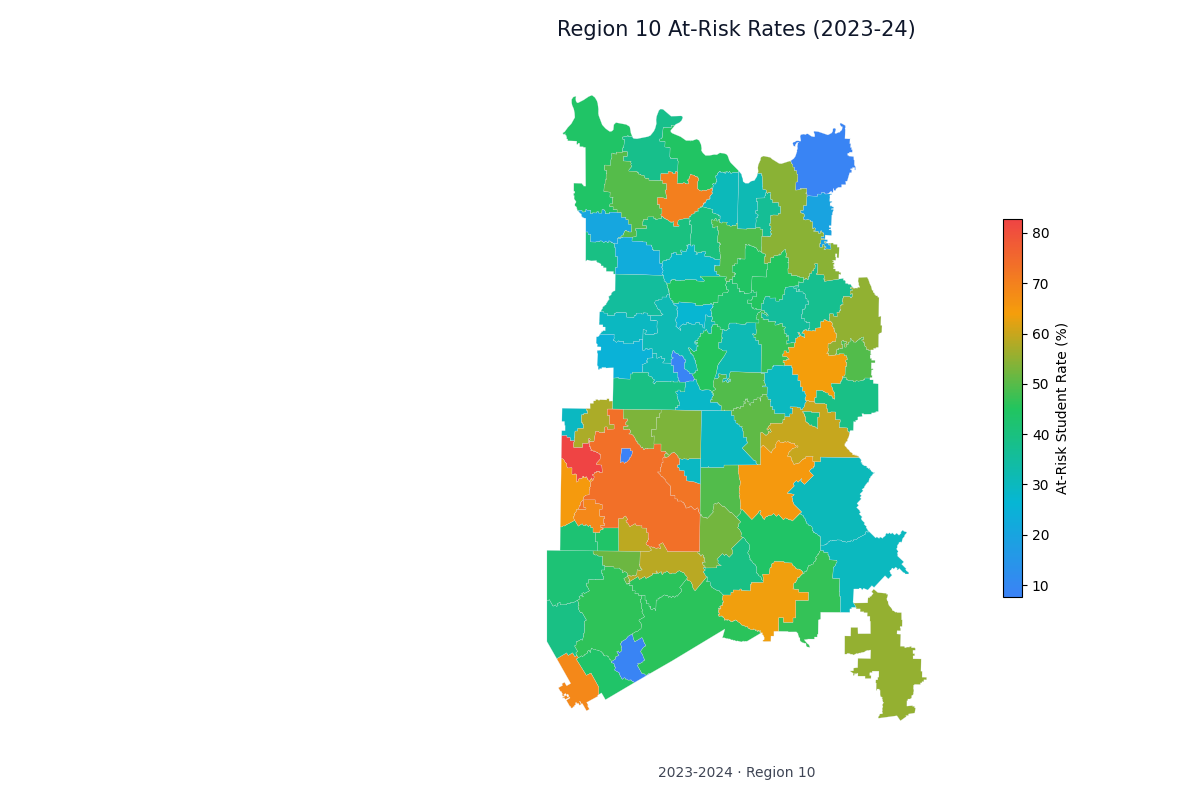
Figure 4. TEI Salary Gap: Choice vs. Comprehensive Campuses (2016-2020)
TIA Designation Rates by At-Risk Quartile (Statewide, 2023-24)
Edgewood ISD Per-Pupil Expenditure by Campus (2024-25)
Edgewood ISD Title I vs. Compensatory Education by Campus (2025-26 YTD)
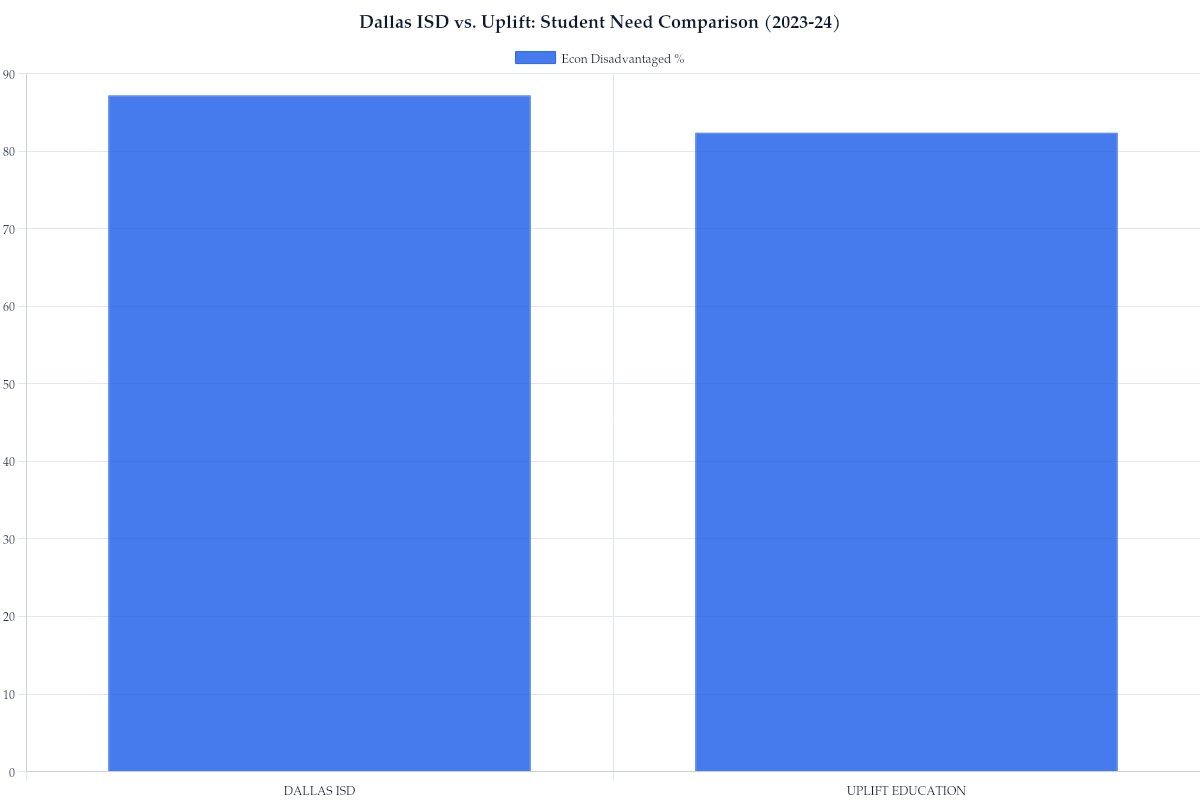
Dallas ISD vs. Uplift: Student Need Comparison (2023-24)
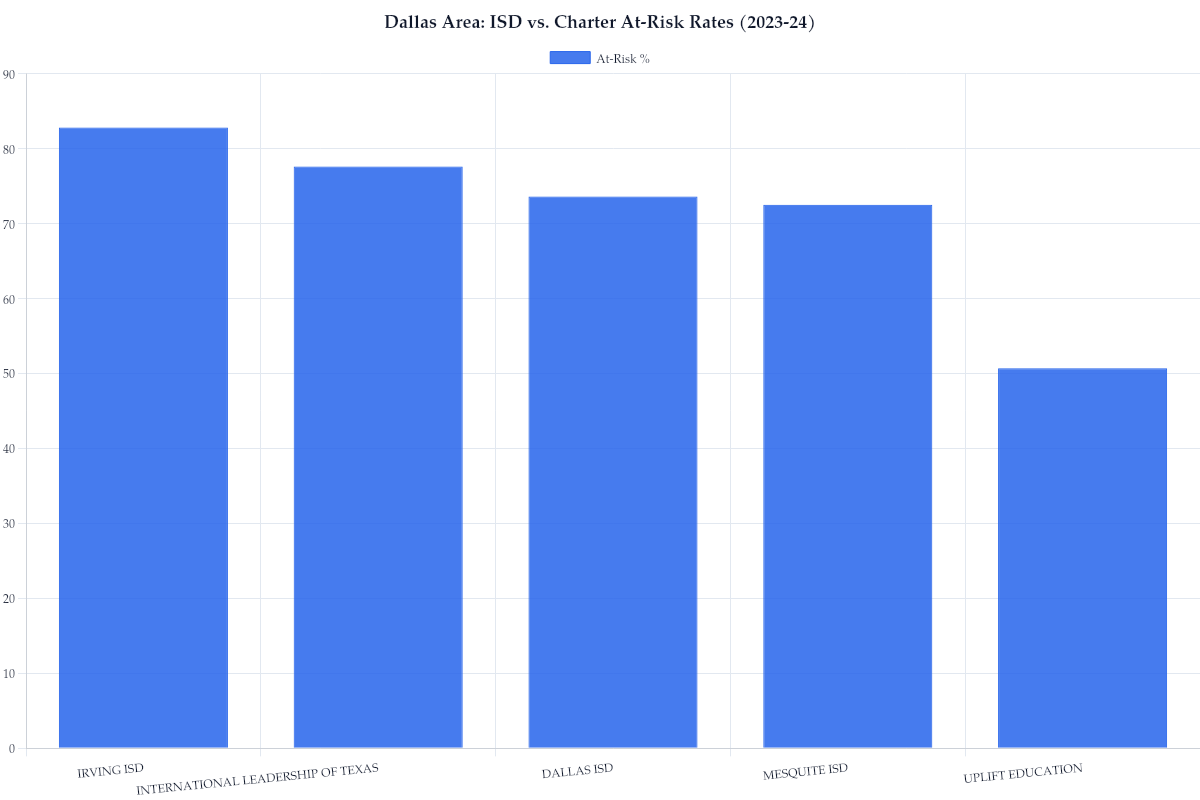
Dallas Area: ISD vs. Charter At-Risk Rates (2023-24)